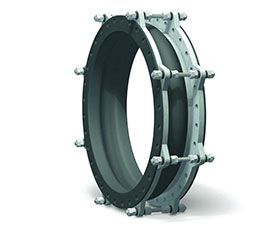
Vibration remains one of the most persistent challenges in industrial piping systems. Equipment cycling, thermal expansion, and mechanical stress create forces that traditional rigid connections simply cannot accommodate. The result is premature failure, unplanned downtime, and safety risks that extend far beyond immediate repair costs. Chemical plants, refineries, and marine installations face particularly acute exposure to these dynamics.
Advanced Expansion Joint Technology
- Engineered Flexibility for Thermal Movement: The integration of ditec bellows represents a significant advancement in managing thermal expansion whilst preserving system integrity. These components absorb axial, lateral, and angular movements that would otherwise transfer destructive forces through pipework. Multiple convolutions distribute stress evenly, preventing concentration points that accelerate fatigue. Material selection becomes critical here, with options ranging from stainless steel to exotic alloys depending on process conditions and chemical compatibility requirements.
- Installation Infrastructure Standards: Reliable assembly depends on consistent crimping quality and proper hose assembly techniques that ensure leak-free connections under pressure cycling. Finn Power India supports this requirement through precision crimping equipment that maintains tolerances across production runs. Automated systems reduce human error during assembly operations, creating uniform compression that withstands vibration and thermal shock. Documentation of crimping force and dimensional verification provides traceability that quality programmes demand.
Application-Specific Performance Considerations
- Chemical and Petrochemical Environments: Process industries present unique challenges where aggressive media combines with temperature extremes. Expansion joints must resist both mechanical fatigue and chemical attack simultaneously. Consider a reactor circulation system operating at 280°C with corrosive intermediates. Standard bellows would fail within months, but properly specified units with protective liners extend service life to years. The cost differential between standard and enhanced designs pales against unplanned shutdown expenses.
- Marine and Offshore Installations: Salt-laden atmospheres and constant motion create accelerated corrosion alongside mechanical stress. Vessels and platforms require expansion joints that accommodate six-axis movement from wave action and thermal cycling. External coatings provide additional protection, though regular inspection remains essential. Some operators implement predictive monitoring to detect early signs of bellows fatigue before catastrophic failure occurs.
Maintenance Planning and Lifecycle Management
- Inspection Protocol Development: Regular visual examination identifies surface cracking, corrosion, or deformation before complete failure develops. Smart organisations establish inspection frequencies based on operating severity rather than arbitrary calendar intervals:
- Conduct initial inspection after commissioning to establish baseline condition
- Increase frequency in high-cycle applications where fatigue accelerates
- Document findings with photographs for trend analysis
- Replace components showing visible damage rather than attempting repair
- Maintain spare inventory for critical service locations
- Performance Optimisation Through Proper Specification: Many premature failures trace back to incorrect initial selection rather than component defects. Undersized bellows experience excessive deflection that shortens life, perhaps significantly. Oversized units add unnecessary cost and weight. Engineering calculations must account for actual operating conditions, not just design parameters. Pressure surges, temperature spikes, and vibration amplitudes all influence selection criteria.
System stability depends on recognising that vibration control requires both proper component selection and reliable assembly infrastructure. Expansion joints engineered for specific thermal and mechanical demands protect critical assets from premature failure. When combined with precision crimping equipment and documented assembly procedures, these solutions deliver measurable improvements in uptime and safety performance. Contact qualified suppliers to evaluate your current systems and identify optimisation opportunities before the next unplanned shutdown.
Featured Image Source: https://www.jreltd.com/images/r4.jpg
