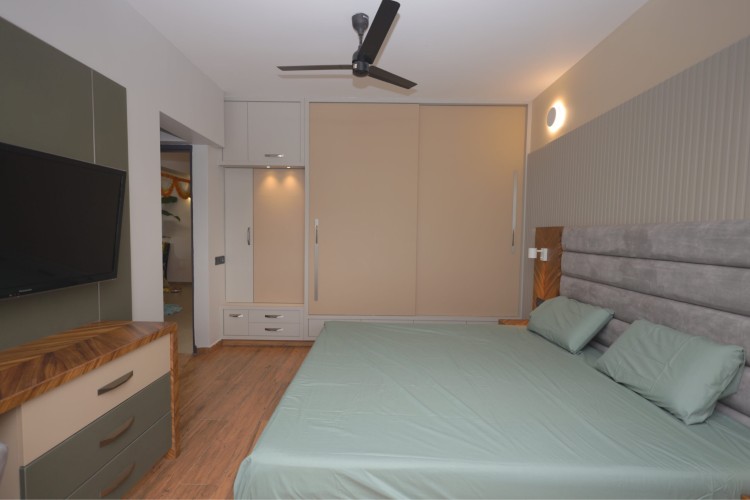
The concept behind turnkey is straightforward. One team takes ownership of the full project, from the first sketch to the final walkthrough. When you work with an interior design company in Udupi that handles execution in-house, there is no gap between what was designed and what gets built. The design stays intact because the same people who drew the plans are the ones supervising the site.
What A Turnkey Project Actually Covers
Civil and structural work: This includes demolition, new partition walls, false ceiling frameworks, and flooring preparation. These are the bones of your interior, and getting them right early prevents expensive corrections later. A turnkey team sequences this work before any finishing trades step on site, ensuring the foundation is solid before surfaces go on.
Electrical, plumbing, and HVAC: Wiring layouts, switch placements, plumbing routes, and air-conditioning ducting are planned during the design phase. That means no last-minute wall chasing or pipe rerouting once the paint and tiles are already done. Mistakes at this stage are costly to undo, which is why planning them alongside the design matters.
Carpentry and custom furniture: Wardrobes, kitchen cabinets, TV units, storage systems, and loose furniture are built to match approved drawings. Measurements are taken on site after civil work is complete, so every piece fits the actual room. This avoids the common problem of furniture arriving and not matching the space it was meant for.
How Single-Point Responsibility Changes The Outcome
When different contractors report to different people, problems slip through the cracks. The electrician blames the carpenter. The painter waits on the plumber. Timelines stretch and costs creep upward. A turnkey model puts one project manager in charge of every trade on site. That person coordinates schedules, resolves clashes between trades, and reports progress to you directly.
This structure also protects your budget. Because materials, labour, and timelines are estimated together at the start, there is less room for surprise costs. Any changes during execution are documented and approved before work begins. You deal with one point of contact instead of juggling six or seven separate conversations every week.
What To Look For In A Turnkey Partner
- A registered architect or qualified designer leading the project, not just a contractor
- A clear cost breakdown across civil, electrical, carpentry, and finishing trades
- A defined timeline with milestones and scheduled progress updates
- In-house teams or long-standing vendor relationships for every trade involved
- A final review process before handover, with a checklist, you can verify yourself
When Every Detail Falls Quietly Into Place
A well-executed interior does not draw attention to the effort behind it. The doors close softly. The lighting sits at the right height. The kitchen counter lines up flush with the wall. These details happen when design and execution stay connected from the first conversation to the last coat of paint.
If you are planning a residential or commercial project in Udupi, look for a team that carries your vision from concept through to a finished room. The right partner will not hand you off to someone else halfway. That continuity is what separates a good-looking space from one that actually works day after day.
Featured Image Source: https://yutoridesigns.in/wp-content/uploads/2025/07/kadri_guestroom-scaled.jpg
