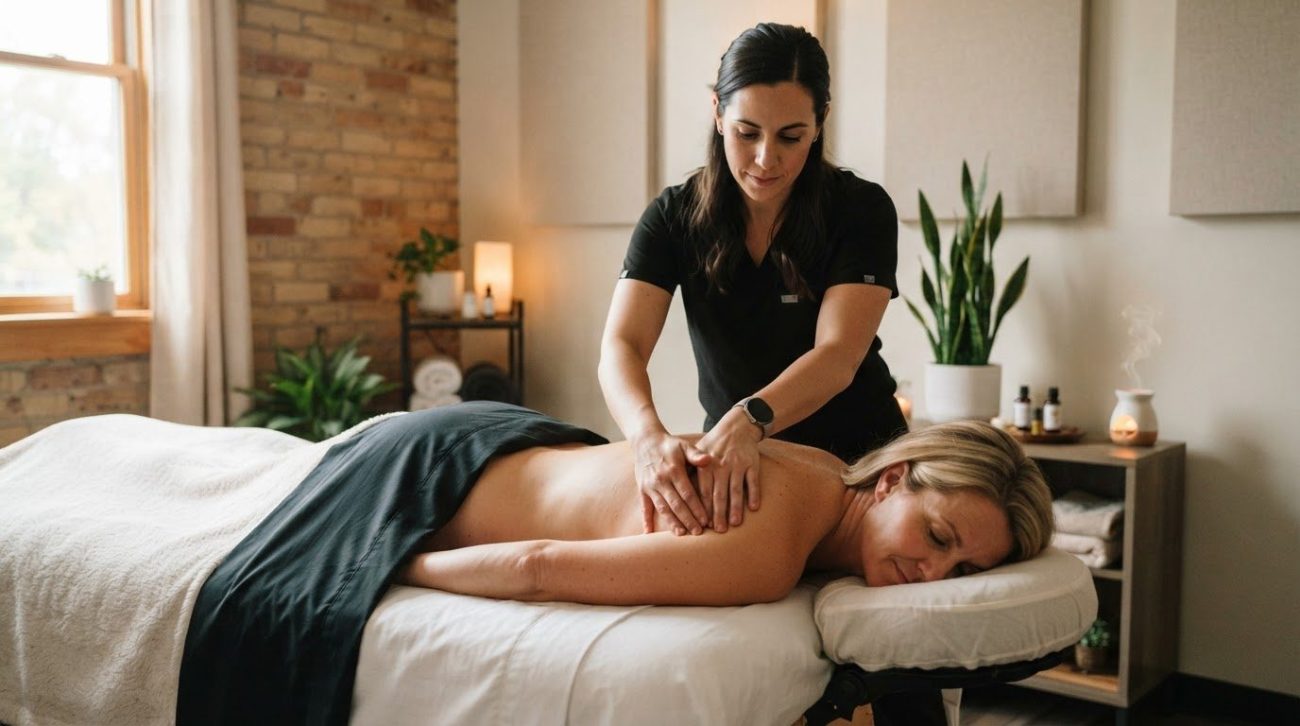
When neck tension follows a desk-bound day or sore legs linger after a workout, finding a nearby massage can be more useful than postponing care for weeks. The right session depends on your symptoms, activity level, comfort with pressure, and how much time you have available.
For people comparing massages near me, location and availability matter alongside technique. A provider close to home or work can make same-day care practical, whether the goal is muscle recovery, foot relief, or a quiet hour away from daily demands.
Massage Escape offers a local option for Columbus-area residents, with services covering several approaches rather than one standardized routine. Before booking, consider what you want the session to accomplish and share that goal clearly with the therapist.
Convenient Massage Therapy Near Columbus
The Columbus location is approximately five minutes from downtown on East Main Street, making it accessible for people commuting through the area or living in nearby communities. Massage Escape serves clients from Columbus, Bexley, Pickerington, and Reynoldsburg.
Walk-in availability can be valuable when discomfort appears unexpectedly. Someone may need care after lifting, running, recreational sports, or a physically demanding shift, while another client may simply want relaxation after a stressful week. A walk-in-oriented model reduces the need for extensive advance planning, although contacting the location first is sensible when timing is important.
Common reasons people search locally include:
- Finding a provider near home or work.
- Scheduling care after exercise or physical strain.
- Addressing tightness in the neck, shoulders, back, hips, or legs.
- Relieving tired feet after prolonged standing or walking.
- Taking regular personal downtime.
A professional local provider should offer a clear intake conversation, explain the available techniques, maintain appropriate draping and boundaries, and adjust the session according to the client’s feedback. Massage is not a substitute for medical diagnosis, but it can be part of a broader approach to managing everyday tension and recovery.
Choose a Massage Based on What Your Body Needs
Deep Tissue and Sports Massage for Muscle Recovery
Deep tissue massage is commonly selected for persistent tightness, restricted-feeling muscles, and areas that need more focused pressure. It may involve slower strokes, compression, and work across deeper layers of muscle and fascia. “Deeper” should not automatically mean painful; excessive force can leave a client unnecessarily sore.
Sports massage is oriented toward active people. It may support recovery after training, address muscle soreness, and focus on movement-related tension. A session before or after exercise should be timed thoughtfully, since aggressive work immediately before strenuous activity may not be appropriate for everyone.
Tell the therapist about recent workouts, repetitive movements, old injuries, and the type of soreness involved. Pressure and treatment areas should be adjusted to the client’s goals and tolerance.
Swedish Massage for Relaxation and General Tension
Swedish massage uses flowing techniques, gliding strokes, kneading, and moderate compression to encourage relaxation and general muscle comfort. It is often a suitable starting point for first-time clients or people seeking a restorative full-body session.
Unlike highly targeted therapeutic work, Swedish massage typically emphasizes a calm, integrated experience. That does not make it ineffective for mild tension; relaxation can help reduce the perception of stress and allow generally tight muscles to settle. Clients can still request additional attention to areas such as the shoulders or lower back.
Foot Massage and Reflexology
Foot-focused care may appeal to people who stand at work, walk extensively, exercise, or spend long hours on hard surfaces. Treatment can address the feet, ankles, calves, and related areas depending on the session design.
Reflexology is a specialized foot treatment commonly chosen for relaxation and general well-being. Practitioners apply pressure to specific areas of the feet according to reflexology methods. It should not be presented as a replacement for medical treatment of circulation problems, nerve disorders, fractures, or persistent pain.
Some clients choose foot work alone, while others combine it with broader full-body attention when appropriate.
Backwalk, Shiatsu, Acupressure, Hot Stone, and Prenatal Care
Backwalk, also known as Ashiatsu, involves therapist-applied pressure through the feet. Because the technique can create substantial, sustained compression, the therapist should discuss pressure, positioning, and health considerations beforehand.
Shiatsu and acupressure use pressure-based work directed at particular points or areas of tension. They may suit clients who prefer structured, focused contact rather than long gliding strokes.
Hot stone massage adds heated stones to a calming treatment. Temperature must be monitored carefully, particularly for clients with reduced sensation or conditions affecting heat tolerance.
Prenatal massage is a specialized service. Pregnancy, trimester, positioning, complications, and medical guidance should be discussed before treatment. A qualified therapist should use appropriate bolsters and positioning and avoid techniques that are unsuitable for the client’s circumstances.
A More Personalized Session Than a One-Style Massage
A useful massage does not have to follow a rigid menu description. Therapists trained in multiple techniques can combine soothing strokes, focused compression, trigger-point work, foot treatment, and full-body attention within one session.
During intake, discuss:
- Areas of pain, stiffness, or limited comfort.
- Preferred pressure and previous reactions to massage.
- Recent workouts, physical labor, or repetitive activity.
- Previous massage experience.
- Pregnancy, injuries, surgeries, medical conditions, or relevant medications.
The session should respond to how the body feels that day. Someone who requested deep tissue work may need lighter pressure if the muscles are acutely sore. Conversely, a relaxation-focused visit may include targeted work on the upper back if that is where tension is concentrated.
Massage therapists do not diagnose injuries. Sharp, radiating, numb, or unexplained pain warrants medical evaluation, particularly when accompanied by weakness, swelling, fever, or changes in function.
What to Consider Before Walking In
Arrive prepared to describe the desired outcome: relaxation, post-workout recovery, foot relief, or focused tension management. Practical preparation can improve both comfort and results.
- Wear comfortable clothing that allows easy movement before and after the appointment.
- Allow recovery time around strenuous activity rather than scheduling intense bodywork immediately before demanding exercise.
- Disclose injuries, medical conditions, pregnancy, allergies, skin concerns, and relevant medications.
- Ask about session length, pricing, current availability, and the techniques included.
- Communicate during treatment if pressure, temperature, positioning, or technique needs adjustment.
Pricing varies by city, session length, specialization, and provider. In many U.S. markets, a 60-minute massage commonly falls roughly between $70 and $150 before gratuity; specialized or premium services may cost more. Confirm current rates rather than relying on national averages.
Clients should expect clear professional boundaries, respectful conduct, suitable sanitation, and a licensed or properly trained massage professional. Ohio practitioners are generally subject to state licensing requirements, so clients can ask about credentials when they have concerns.
Frequently Asked Questions About Local Massage
Do I need an appointment, or can I walk in?
Massage Escape emphasizes walk-in-oriented care, which can help people seeking same-day service. Availability can change throughout the day, so contact the location if you need to confirm a specific time, therapist, or technique.
Which massage is best for tight muscles?
Deep tissue may suit persistent, localized tightness. Sports massage can be appropriate for training-related soreness or movement demands, while acupressure and shiatsu offer more point-focused approaches. The best choice depends on intensity, location, duration, and your tolerance for pressure.
Is Swedish massage only for relaxation?
No. Swedish massage is relaxation-focused, but its flowing techniques and moderate pressure can also support general muscle comfort and reduce the physical effects of stress. It is often a practical choice for first-time clients.
What should I choose for sore feet?
Foot massage or reflexology are logical starting points after prolonged standing, walking, or exercise. If soreness is severe, persistent, associated with swelling, or caused by an injury, seek medical advice instead of relying only on massage.
Can a massage therapist adjust the pressure?
Yes. Pressure should be discussed before and during the session. Speak up if the work feels too light, too intense, painful, too warm, or uncomfortable. Effective communication is part of a properly tailored treatment.
How often should I get a massage?
There is no universal schedule. Frequency depends on your goals, activity level, stress, soreness, budget, and response to treatment. Some people book occasional sessions, while others establish a regular routine. When symptoms involve an injury or medical condition, follow guidance from an appropriate healthcare professional.
