A recurring sewer backup is rarely solved by guesswork. If a drain clears temporarily and then fails again, the obstruction may be only one symptom of a damaged, shifted, root-invaded, or sagging sewer lateral.
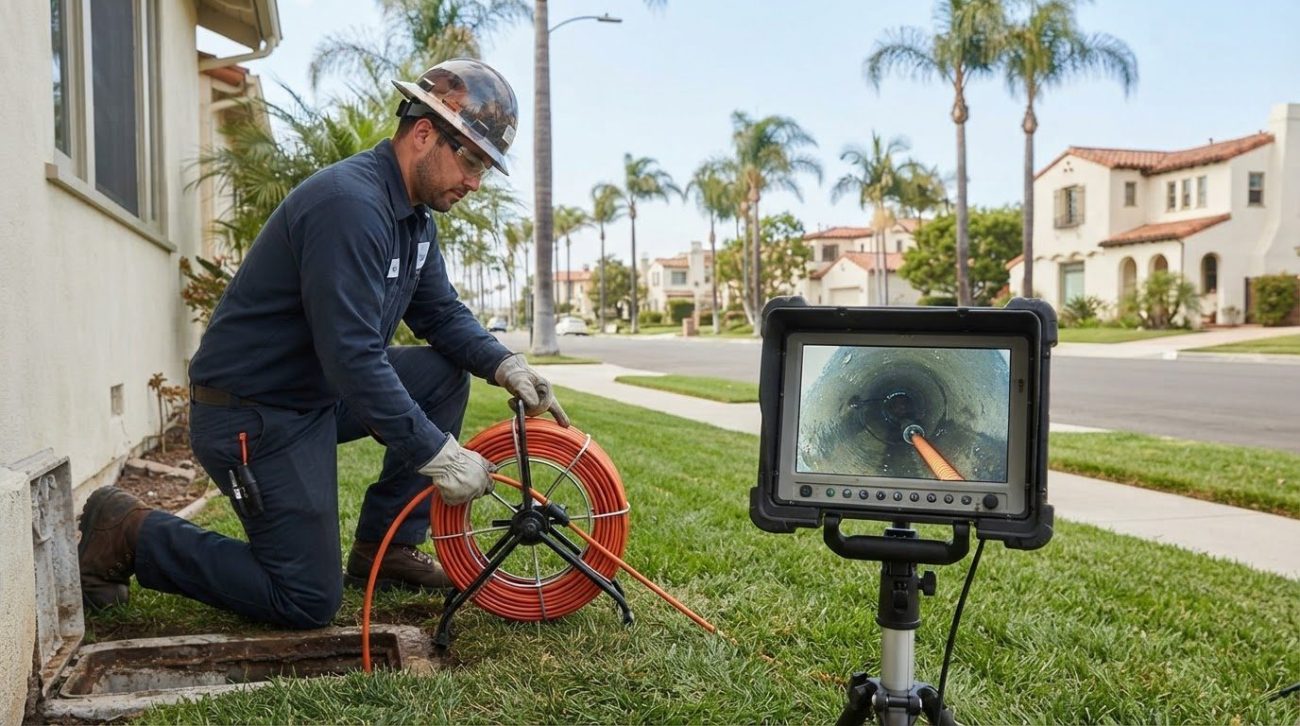
The phrase Sewer camera inspection Huntington Beach generally refers to using a waterproof, push-camera system to examine the private sewer line serving a home. Unlike a basic drain clearing, the inspection is intended to show the pipe’s condition, identify a defect, and help locate it underground.
Before authorizing excavation, hydro-jetting, or replacement, homeowners should understand what the camera can prove, what it cannot, and what documentation they will receive. Plumbing by Tony handles sewer lines and related plumbing work with upfront estimates, which makes it reasonable to ask for a clearly defined inspection scope before work begins.
When a Sewer Camera Inspection Is Worth Scheduling
A camera inspection is especially useful when symptoms point beyond an isolated fixture clog:
- Backups return after snaking or drain cleaning.
- Several fixtures become slow at the same time.
- Toilets gurgle when a sink, shower, or washing machine drains.
- Sewer odors persist, or sewage appears in a yard or cleanout.
- Wet, unusually green, or sunken patches develop along the presumed sewer route.
- A repair or replacement recommendation needs independent verification.
Older Huntington Beach properties may have clay, cast-iron, or other aging lateral materials, and established landscaping can increase the possibility of root intrusion at joints or cracks. That does not mean every older home needs an annual scope. However, a proactive inspection can be sensible when the line has an unknown maintenance history or before buying a property.
A sewer scope is also valuable before opening a floor, driveway, patio, or landscaped area. Visual evidence can help distinguish a localized defect from a line-wide problem and may prevent unnecessary demolition.
For a purchase, request a dedicated sewer scope rather than assuming it is included in a standard home inspection. For a sale, documentation of the lateral’s condition can reduce uncertainty during escrow and clarify whether a recommended repair is supported by evidence.
What the Camera Can Reveal Inside the Line
A drain machine restores flow; a sewer camera helps explain why flow was restricted. A qualified technician typically advances a camera head attached to a flexible push rod through an accessible cleanout and watches the pipe interior on a monitor.
Common findings include:
- Tree roots entering through joints, cracks, or failed connections.
- Cracked, broken, shifted, or collapsed pipe sections.
- A belly, or sag, where wastewater and sediment repeatedly collect.
- Grease, mineral scale, sludge, and other heavy buildup.
- Corrosion inside older metal piping.
- Foreign objects or obstructions that prevent the camera from reaching the entire line.
Many camera systems include a sonde—a small radio transmitter near the camera head. With an electronic locator, the technician can mark a defect’s approximate horizontal position and depth. That information is useful when planning a spot repair or determining where excavation would occur.
The inspection also has limits. It may not establish whether a defect is on the city side or the homeowner’s side of the connection. That determination can require property records, easements, agency standards, and a review of the public right-of-way. A camera cannot see beyond a collapsed section, inaccessible branch, severe blockage, or missing cleanout. Nor does footage alone always determine whether a pipe should be repaired, lined, or replaced; structural condition, access, permits, and local requirements also matter.
How a Huntington Beach Sewer Camera Inspection Is Performed
A typical residential workflow is straightforward:
- The technician locates and opens a cleanout or another suitable access point.
- The line is assessed to determine whether roots, grease, or standing water require preliminary clearing.
- A waterproof camera is advanced through the sewer lateral.
- Live footage is reviewed, with notable defects documented by distance from the access point.
- If needed, the camera is located from the surface to estimate defect position and depth.
- The technician explains findings and outlines appropriate next steps.
Many residential inspections take approximately 30–60 minutes. Longer laterals, difficult access, heavy blockage, or added cleaning can extend the appointment. A collapsed section may prevent a full inspection rather than simply making it slower.
Homeowners can prepare by:
- Identifying cleanouts if their locations are known.
- Reporting recent backups, drain cleanings, remodels, or recurring symptoms.
- Clearing stored items, soil, or landscaping from access areas.
- Asking whether video, still images, or written findings are included.
- Confirming whether locating and cleaning are separate charges.
Huntington Beach’s coastal environment does not automatically cause sewer failures, but aging infrastructure, shifting soil, landscaping, and long-established neighborhoods can all affect residential laterals. The relevant evidence is the condition of the specific line, not the home’s age alone.
Understanding Inspection Pricing and Repair Recommendations
There is no reliable single price for every sewer camera inspection. A practical Orange County benchmark is often about $150–$500 for a basic inspection, with higher totals possible when access is difficult, cleaning is required, locating is added, or detailed reporting is requested. Emergency scheduling and unusually long lines can also affect pricing.
Ask for an estimate that separates:
- Camera inspection.
- Drain cleaning or hydro-jetting.
- Electronic locating.
- Video or written reporting.
- Any repair or excavation.
A low advertised starting price may cover only a short, accessible inspection. It may not include clearing a root obstruction, opening a buried cleanout, or producing transaction-ready documentation.
Footage can help differentiate among several responses:
- Routine cleaning or hydro-jetting: Appropriate when the pipe is structurally sound but obstructed by roots, grease, or scale.
- Spot repair: Useful for a localized crack, offset, or failed joint with otherwise serviceable pipe.
- Trenchless rehabilitation: Lining or pipe-bursting may reduce surface disruption, but suitability depends on diameter, alignment, access, and structural condition.
- Conventional excavation: May be necessary for a deep, collapsed, severely misaligned, or inaccessible section.
- Full replacement: Considered when damage is extensive or the remaining pipe has reached the end of its practical service life.
Before approving major work, ask:
- Where exactly is the defect, and how was it located?
- Is the pipe structurally damaged or merely obstructed?
- Can I review and retain the footage?
- What alternatives are available, and what conditions make each suitable?
- Does the proposal address the entire problem or only the current blockage?
Technicians and companies should also be able to explain applicable California licensing, permitting, and safety requirements. OSHA practices matter when excavation or confined-space hazards are involved; homeowners should not enter sewer pits, trenches, or manholes.
Questions Huntington Beach Homeowners Commonly Ask
How long does a sewer camera inspection take?
Most residential visits take about 30–60 minutes, including a basic findings review. Access problems, blockage, line length, cleaning, or locating can extend the appointment.
Do I need the sewer line cleaned before the camera inspection?
Not always. A clear line may be inspected immediately. Roots, grease, sediment, or standing debris can obscure the lens, however, so cleaning may be needed for a reliable view. Ask whether that work is included or billed separately.
Can an inspection find tree roots, pipe collapse, or a sewer-line belly?
Yes, these are common camera findings when the camera can reach the affected area and visibility is adequate. A belly is typically identified by standing water and a low section where debris accumulates. The camera may not pass a complete collapse or severe obstruction.
Should I get a sewer scope when buying a Huntington Beach home?
It is worth considering, particularly for an older property, a home with mature trees, or a line with no documented inspection history. Standard home inspections may not include sewer scoping. A dedicated inspection can reveal a hidden expense before closing and provide evidence for negotiations.
Will I receive video or a written report?
Deliverables vary. Confirm before booking whether you will receive a recording, still images, measurements, a written summary, or all four. Documentation is especially important for a real-estate transaction, insurance file, or comparison between repair proposals.
Does the inspection determine whether the city or homeowner is responsible?
It can identify the affected section and provide useful distance and locating information, but it usually does not decide legal or administrative responsibility by itself. Property lines, easements, connection points, local records, and agency requirements may need to be reviewed.
A sewer camera inspection is most valuable when it turns an assumption into a documented diagnosis. Whether the result is “clean the line,” “repair one section,” or “plan a larger replacement,” homeowners gain a clearer basis for deciding what work—and what cost—is actually justified.
