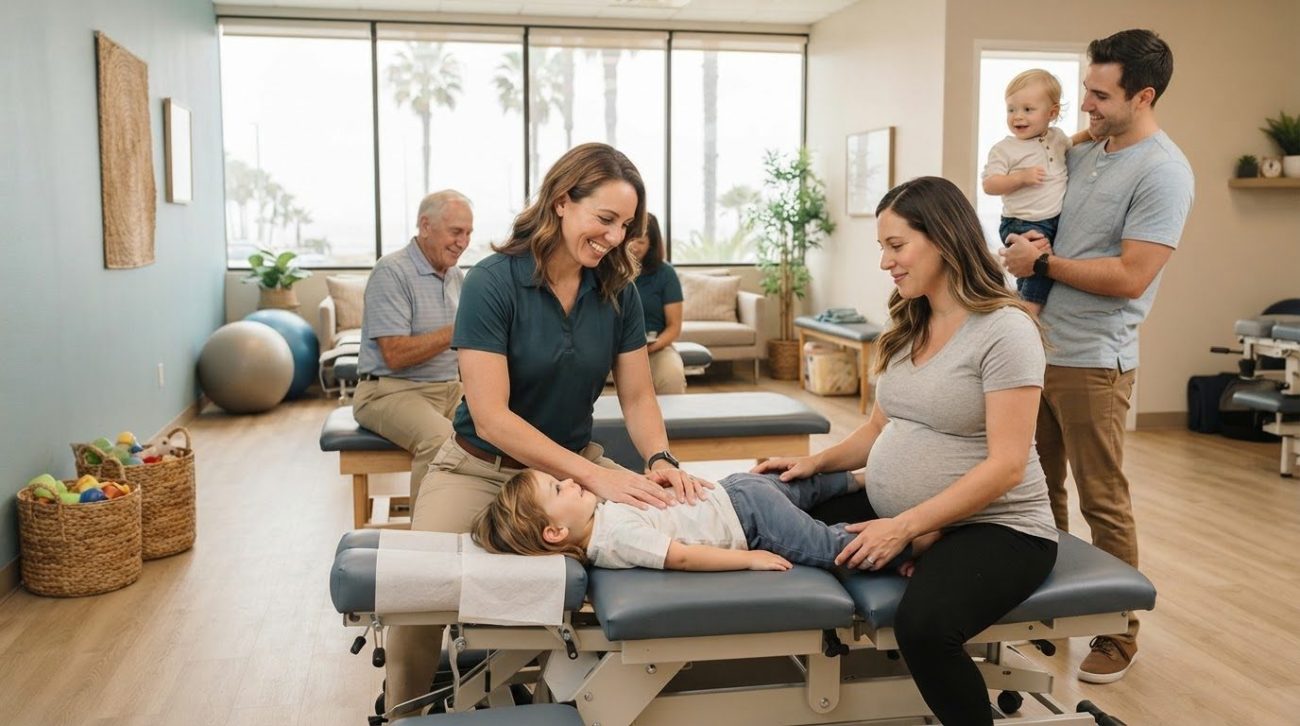
Pregnancy, infancy, childhood, and adulthood each place different demands on the body. A family chiropractic practice can provide continuity across those life stages while still adjusting its evaluation methods, techniques, and goals for each individual.
Choosing a Family Chiropractor means looking beyond a one-size-fits-all adjustment. Families should consider clinical training, pediatric and prenatal experience, communication style, safety screening, and whether care plans are based on documented needs rather than automatic visit schedules.
In Costa Mesa, families exploring these options can learn more about Blooming Chiropractic and compare its approach with their own health goals. Chiropractic care should complement—not replace—primary, obstetric, pediatric, or specialist medical care.
A Family-Centered Approach to Chiropractic Wellness
A family-centered practice recognizes that “wellness” is broader than spinal alignment. Assessment may include joint mobility, muscle tension, posture, movement patterns, daily ergonomics, sleep position, stress, and activities that contribute to discomfort. The nervous system is considered as part of the body’s communication and movement processes, but responsible care avoids claiming that chiropractic treatment can cure unrelated medical conditions.
One household may include a pregnant parent with pelvic discomfort, a child with movement concerns, and an adult experiencing desk-related neck tension. Their care should not be identical. Each person needs an age-appropriate history, physical examination, informed consent, and clearly explained recommendations.
A welcoming environment also matters. Families may need to bring siblings, feed an infant, or allow a child time to become comfortable with the room. A cheerful setting with space to relax or play can reduce anxiety and make appointments more manageable without compromising privacy or individualized attention.
Prenatal and Postpartum Chiropractic Support
Pregnancy changes the center of gravity, joint loading, gait, and soft-tissue demands. Common concerns that lead people to seek chiropractic evaluation include:
- Low back discomfort and pelvic girdle pain.
- Sciatica-like symptoms or radiating leg discomfort.
- Hip tension, rib discomfort, and muscle strain.
- Difficulty adapting to changing posture and daily movement.
A prenatal examination should begin with a health history and screening for symptoms that require medical evaluation. Severe or progressive weakness, loss of bladder or bowel control, vaginal bleeding, fever, unexplained weight loss, chest pain, or significant trauma are not routine chiropractic concerns and warrant prompt medical attention.
Care can be modified by trimester, comfort level, body position, and clinical findings. Techniques may involve gentle manual procedures, soft-tissue work, mobility guidance, and education about lifting, sleep positioning, walking, and other activities. A practitioner should explain what will happen before treatment and stop if a technique causes concerning symptoms.
Blooming Chiropractic’s doctors are identified as Webster Technique certified. The Webster Technique is a pregnancy-related protocol intended to address pelvic and sacral biomechanics and surrounding soft tissues. Certification supports specialized training, but it does not guarantee fetal positioning, labor timing, delivery type, or any particular birth outcome. Decisions about pregnancy complications and birth planning belong with the patient’s obstetric or midwifery team.
Postpartum care addresses a different physical workload. Feeding, carrying, rocking, lifting a car seat, and prolonged seated positions can contribute to neck, shoulder, wrist, upper-back, or low-back strain. Recovery plans should account for delivery history, healing status, sleep disruption, activity level, and medical clearance. Gradual strengthening, ergonomic changes, and referral when symptoms fall outside chiropractic scope are important parts of responsible care.
Gentle Chiropractic Care for Infants and Children
Pediatric chiropractic visits should differ substantially from adult appointments. Infants and children require age-appropriate observation, communication, positioning, consent from a parent or guardian, and techniques using very low force. The provider should explain the purpose of an examination and avoid adult-style assumptions about a child’s symptoms.
Parents may seek an evaluation for:
- Asymmetrical movement or a preference for turning the head.
- Musculoskeletal comfort after everyday strain or minor injury.
- Movement coordination or posture concerns.
- Sleep-related challenges or general wellness questions.
Evidence for pediatric chiropractic care varies by condition, and improvement in one child should not be presented as proof that treatment will produce the same result for another. Chiropractic care should complement regular pediatric visits, immunizations, developmental screening, and medical treatment. It should never be used to delay evaluation of breathing difficulty, poor feeding, lethargy, fever, seizures, developmental regression, serious injury, or other urgent symptoms.
A child-focused team can build trust by letting children observe first, using simple explanations, offering choices when appropriate, and allowing a parent to remain involved. Pediatric certification and experience are useful, but families should still ask about training, technique, contraindications, and when referral to a pediatrician or another specialist is recommended.
Care Designed Around Each Family Member
The most useful family care plans are individualized. A first assessment may document range of motion, neurological findings, gait, muscle tone, joint tenderness, functional limitations, and relevant medical history. Imaging is not automatically necessary; it should be considered when clinical findings or trauma indicate that it may change management.
Adults commonly seek care for neck tension, back discomfort, headaches associated with musculoskeletal strain, or posture-related symptoms from computers, driving, studying, and caregiving. Treatment may include spinal or extremity manipulation, mobilization, soft-tissue techniques, therapeutic exercise, and ergonomic education. Risks—including temporary soreness and, rarely, more serious complications—should be discussed, particularly for cervical manipulation or patients with relevant medical conditions.
Families can sometimes schedule appointments during the same visit, but shared timing should not mean identical treatment. A pregnant patient, newborn, school-age child, and office worker need separate histories, examinations, and consent discussions. Efficient scheduling is valuable only when each patient receives adequate attention.
Ongoing wellness visits may be appropriate when they are clinically justified, understood by the patient, and aligned with specific goals. Patients should be able to ask what each visit is intended to address, how progress will be measured, and when care should be reduced, changed, or discontinued. A reasonable plan includes reassessment rather than indefinite treatment by default.
What to Expect at Blooming Chiropractic
A well-structured first visit generally includes:
- A discussion of the primary concern, goals, medications, prior injuries, surgeries, pregnancy status, and relevant medical diagnoses.
- A physical examination appropriate to the patient’s age and symptoms.
- An explanation of findings, possible care options, expected benefits, limitations, risks, and alternatives.
- A recommendation for referral or co-management when symptoms require medical, obstetric, pediatric, neurological, or orthopedic input.
Families should ask practical questions before beginning:
- Which techniques are used for pregnant patients, infants, children, and adults?
- What pediatric or prenatal certifications and continuing education does the provider hold?
- How will progress be evaluated?
- What symptoms require immediate medical attention?
- How often are visits recommended, and what is the expected cost?
- Is insurance billed directly, or will the patient receive documentation such as a superbill?
Pricing varies by location, provider, visit length, and whether examination or therapy is included. In Southern California, an initial chiropractic consultation and examination may commonly range from roughly $75 to $200, while follow-up visits may fall near $50 to $120; these are broad estimates, not a quote. Pregnancy and pediatric visits may have different fees. Patients should request a written fee schedule and clarify cancellation policies, package requirements, and reimbursement procedures.
Costa Mesa families also contend with long driving times, desk-based work, and year-round outdoor activity, all of which can influence posture, repetitive strain, and appointment logistics. The right practice should make care understandable and convenient while maintaining clinical boundaries.
Families considering prenatal, postpartum, pediatric, or general chiropractic care can contact Blooming Chiropractic to discuss concerns, ask about an initial evaluation, and determine whether its services fit their needs. If symptoms are severe, unusual, or rapidly worsening, contact an appropriate medical professional first.
