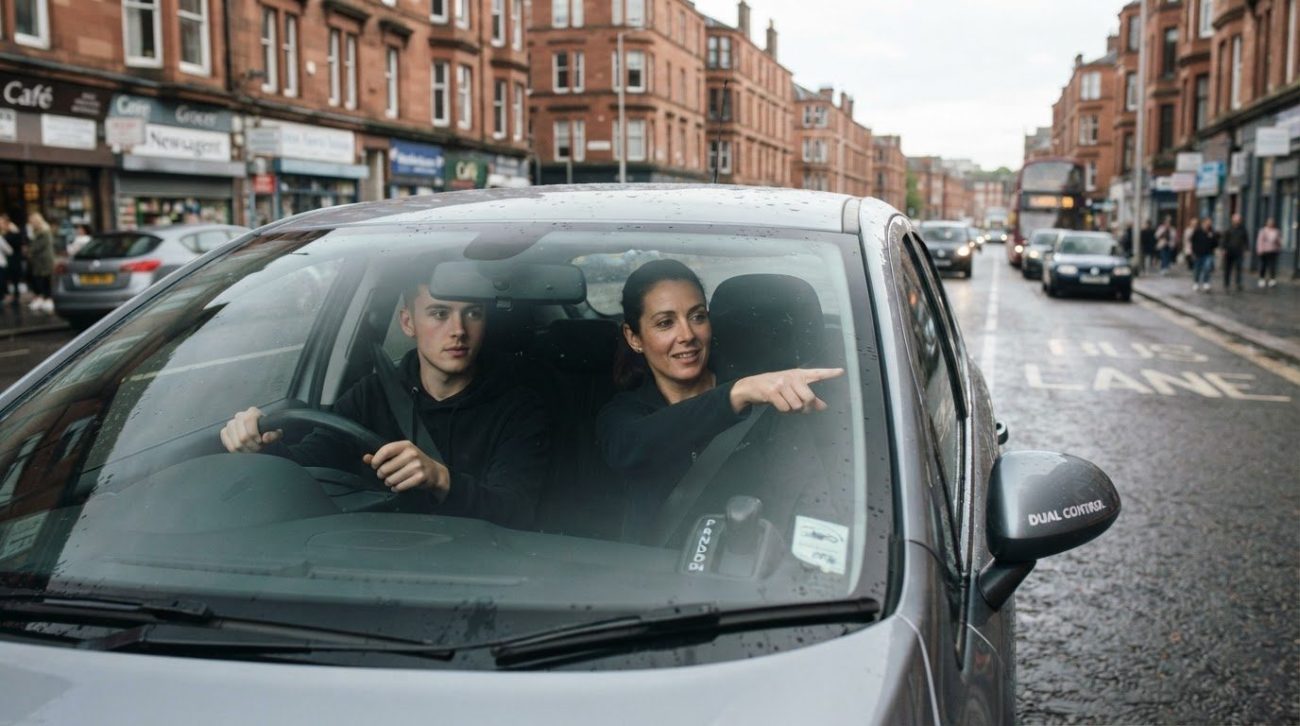
Learning to drive in Glasgow means progressing from quiet residential streets to complex junctions, steep gradients, heavy traffic and fast-moving multilane roads. Choosing an automatic instructor is therefore about more than finding the lowest hourly rate: it is about securing structured tuition that builds safe, independent decision-making.
Prices, availability and coverage vary, so researching best driving lessons glasgow can help you compare local options before making enquiries. Look for recent learner feedback, clear contact information and evidence that the instructor regularly teaches in the areas where you expect to drive and test.
A reputable provider such as topgeardrivingtuition should be willing to explain its lesson structure, vehicle arrangements and instructor qualifications. Treat the first conversation as an assessment of compatibility rather than a sales pitch: a good instructor will ask about your experience, availability, confidence and objectives.
What Makes a Driving School a Strong Choice in Glasgow
In Great Britain, driving instructors who teach for payment should be approved by the Driver and Vehicle Standards Agency (DVSA). Ask whether your instructor is a fully qualified Approved Driving Instructor (ADI), rather than assuming that every person displaying a school logo has the same qualification. The DVSA’s public register can help verify an instructor’s status.
Experience matters, but it should be relevant experience. Someone who regularly teaches beginners may be better suited to a first-time learner than an instructor who mainly provides advanced training. Ask whether they teach automatic pupils, nervous learners, older beginners, refresher students or drivers changing from a manual licence.
Reviews are useful when read critically. Look for repeated comments about:
- Calm, respectful communication.
- Punctuality and reliable vehicle availability.
- Clear explanations and measurable progress.
- Adaptation for anxiety, disability or previous driving experience.
- Preparation for independent driving rather than route memorisation.
A strong lesson normally has an objective, practical coaching and a short review. The instructor should explain what went well, identify risks and agree on the next target. They should also be prepared to vary the pace: rushing a nervous learner can undermine confidence, while repeating easy roads indefinitely can delay progress.
Automatic Lessons for Glasgow’s Different Learner Needs
Automatic cars remove clutch control and manual gear changes, reducing the number of simultaneous tasks in stop-start traffic. This can make it easier to concentrate on observation, road position, speed control and anticipation—particularly around busy junctions, buses and cyclists.
Automatic tuition can suit:
- Beginners who find clutch control distracting.
- Nervous learners who benefit from a lower initial workload.
- Refresher pupils returning to driving after a long gap.
- Manual licence holders who are moving to an automatic vehicle.
However, passing the practical test in an automatic normally results in a Category B licence restricted to automatic cars. To drive a manual car later, you would generally need to pass another practical test in a manual vehicle. Confirm the current licence position with the DVLA if your circumstances are unusual.
Vehicle specification also affects learning quality. Dual controls allow the instructor to intervene when necessary, while air conditioning can make concentration easier during warmer weather or congested journeys. A comfortable driving position, clear visibility and controls that are easy to operate matter more than choosing a particular badge. If possible, ask what vehicle will be used consistently for lessons and the test.
How Lessons Prepare You for Real Glasgow Driving
Competent tuition extends beyond moving off and stopping. A planned syllabus should progressively cover:
- T-junctions, crossroads, spiral and multilane roundabouts.
- Mirror use, signalling, lane discipline and speed selection.
- Parallel, bay and perpendicular parking.
- Hill starts, controlled stops and meeting on narrow roads.
- Sat-nav or examiner-directed independent driving.
- Emergency stops, appropriate following distances and hazard anticipation.
Glasgow’s urban environment presents specific challenges. Congestion can obscure signs and junction markings; bus lanes may operate at restricted times; and city-centre one-way systems demand early planning. Learners should also gain experience on dual carriageways and motorways when appropriate. Scotland’s rapidly changing weather can affect visibility, braking distances and road surface grip, so lessons should not rely exclusively on ideal conditions.
An instructor should expand the difficulty in stages: quiet streets first, then moderate traffic, unfamiliar areas, larger roundabouts and faster roads. This is more effective than keeping a learner on familiar routes until test week. Test preparation should focus on meeting the national standard consistently, including the “show me, tell me” safety questions, rather than memorising a small number of Glasgow test routes.
Before booking, ask how progress is recorded. A useful system identifies developing competencies, recurring faults and independent practice goals. Mock tests can reveal whether mistakes are isolated or part of a wider pattern, but they should supplement—not replace—normal learning.
Choosing the Right Lesson Format and Course
Weekly lessons provide continuity and time to practise between sessions. They can be suitable for learners with school, university or work commitments, although infrequent lessons may slow retention. Intensive courses compress training into a shorter period and can work for pupils with substantial availability, provided the schedule includes breaks and enough time to consolidate skills.
Other formats include:
- Refresher lessons for licence holders who feel uncomfortable after a driving break.
- Motorway tuition for newly qualified or inexperienced drivers.
- Post-test coaching for commuting, parking or unfamiliar routes.
- Short assessment sessions before committing to a larger package.
Lesson frequency should reflect confidence, budget and progress. Two shorter sessions may be more productive than one long session for a very anxious beginner, while an experienced learner may benefit from longer lessons that include motorway or independent-driving work.
Block bookings can reduce the effective hourly price, but compare the saving with the financial risk. Before paying in advance, check whether unused lessons are refundable, how long the credit remains valid and whether you can change instructor. A low advertised rate may not represent value if travel time, cancellation charges or vehicle changes make the course impractical.
Clarify the following in writing:
- Lesson length and the total price, including any test-day fee.
- Pick-up areas from home, work, college or university.
- Cancellation and postponement terms.
- Whether the same instructor and vehicle will normally be provided.
- Vehicle availability for the practical test.
- What happens if the instructor is ill or the vehicle is unavailable.
Typical UK lesson prices vary by region, vehicle and instructor experience. In Glasgow, learners may encounter roughly £35–£50 for a standard one-hour lesson, with longer sessions and intensive packages priced differently. These are indicative ranges, not a quotation; confirm current rates directly and calculate the total cost rather than comparing hourly figures alone.
Questions to Ask Before Booking Driving Lessons
A short telephone call can expose important differences between providers. Ask:
- What is the current hourly rate, and are block or intensive-course discounts available?
- Is the instructor a fully qualified ADI and experienced with automatic learners?
- Which Glasgow districts and surrounding towns are covered?
- Can lessons start at a home, workplace, college or university?
- How is progress assessed and recorded?
- When would you recommend booking the theory and practical tests?
- What happens if I need to change instructor or postpone a lesson?
- Is the car dual-controlled, air-conditioned and available for the test?
- How many lessons might I realistically need to become test-ready?
No ethical instructor can guarantee a pass or promise that 20 lessons will be enough. The number required depends on previous experience, lesson frequency, private practice, confidence and the ability to drive safely without prompting. The practical benchmark is consistent performance across unfamiliar roads and changing traffic conditions.
The best automatic driving lessons in Glasgow should leave you capable of making sound decisions without instructor intervention. Compare qualifications, teaching quality, local-road experience, vehicle suitability and total cost together; that combination is a more reliable guide than a headline discount or an unverified pass-rate claim.
