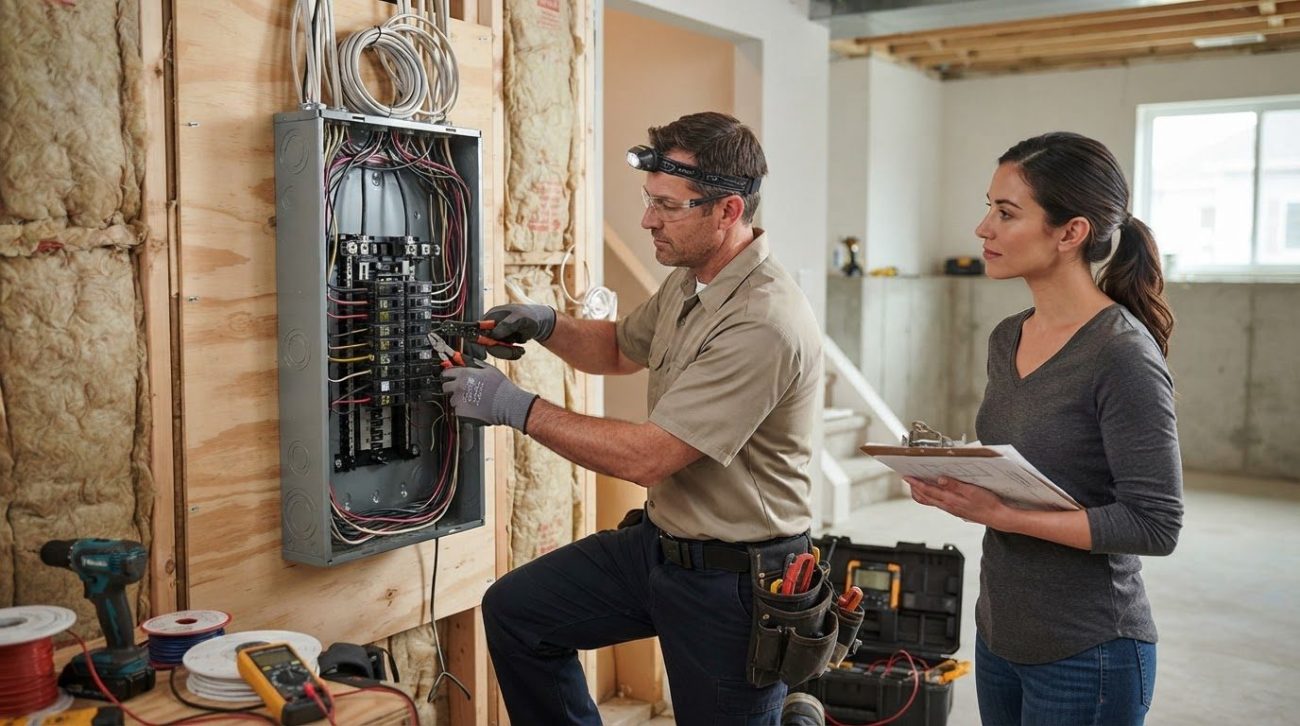
A flickering light may be a minor fixture problem—or an early warning that an older electrical system cannot safely support modern household loads. New construction, remodels, service changes, and equipment additions all require careful planning before wires are installed or breakers are changed.
For homeowners comparing residential electrical installation services, the work can include far more than basic wiring. A complete installation may involve load calculations, grounding and bonding, dedicated circuits, panel capacity, lighting, safety devices, permits, and final testing.
Zimmerman Electric Indy approaches each project by evaluating the existing system, the home’s intended use, and likely future demand. That is especially important in Indianapolis and surrounding Central Indiana communities, where older housing stock, severe storms, additions, and electrification projects often place new demands on existing infrastructure. More information is available from zimmermanelectricindy.
Residential Electrical Installation Services for New and Existing Homes
Electrical planning differs substantially by project type:
- New construction: Electricians design the wiring layout before walls are closed, coordinate service size and panel locations, and install rough-ins for lighting, receptacles, HVAC, appliances, communications, and future equipment.
- Older homes: The assessment may uncover ungrounded receptacles, limited service capacity, cloth-insulated conductors, deteriorated insulation, or modifications that do not meet current standards.
- Renovations and additions: The electrician must connect new work to the existing system without overloading circuits, while accounting for wall access, finished surfaces, and structural constraints.
- Garages and outbuildings: These may require underground feeders, disconnects, grounding electrodes, weather-resistant equipment, and separate load calculations.
A sound design considers conductor sizing, voltage drop, overcurrent protection, grounding and bonding, arc-fault circuit interrupter (AFCI) protection, ground-fault circuit interrupter (GFCI) protection, and spare panel capacity. Indianapolis projects may also involve permits and inspections through the Department of Business and Neighborhood Services (DBNS), depending on the scope.
Wiring, Circuits, Panels, and Whole-Home Power Improvements
Home Electrical Wiring and Dedicated Circuits
A dedicated circuit supplies one major appliance or system without sharing its load with general-purpose receptacles. It is commonly used for:
- Electric ranges, ovens, dishwashers, disposals, refrigerators, and microwaves.
- Laundry equipment, water heaters, furnaces, air conditioners, and heat pumps.
- Bathroom receptacles, kitchen countertop receptacles, home offices, workshops, and garage equipment.
- EV chargers, hot tubs, sump pumps, and standby generator equipment.
Adding a larger breaker to stop nuisance tripping is unsafe unless the conductors, equipment, and service are rated for it. An electrician diagnoses the circuit by checking breaker size, conductor gauge, termination condition, voltage, current draw, and connected loads. New wiring may be installed through accessible framing, attics, basements, crawlspaces, or carefully opened walls.
Electrical Panel Upgrades and Replacements
Frequent breaker trips, warm panel covers, buzzing, corrosion, inadequate spaces, and flickering lights can indicate capacity or equipment problems. A panel upgrade may also be appropriate before adding central air conditioning, an induction range, heat pump, EV charging, or a workshop.
Many older homes have 100-amp service, while a 200-amp service may better accommodate modern loads—but the correct size depends on a formal dwelling load calculation. The utility service, meter equipment, service entrance conductors, grounding electrode system, and panel must be compatible.
Federal Pacific Stab-Lok and Zinsco panels deserve professional evaluation because documented failure concerns and aging components can increase risk. Aluminum branch-circuit wiring and other legacy systems also require specialized inspection; replacement, approved terminations, or other corrective work may be necessary.
Whole-Home Rewiring
Rewiring is not automatically required because a home is old. An electrician typically maps circuits, opens representative boxes, examines insulation and connections, tests grounding and polarity, checks for overheating, and reviews the service equipment. Replacement becomes more likely when the system has:
- Brittle cloth or rubber insulation.
- Ungrounded two-wire branch circuits where grounding is needed.
- Extensive aluminum wiring or unsafe splices.
- Repeated overheating, improper extensions, or undocumented alterations.
- A major renovation that exposes walls and makes access more efficient.
A complete rewire should include correctly sized copper or approved conductors, grounding and bonding, AFCI and GFCI protection where required, labeled circuits, and verification testing.
Lighting, Outlets, Safety Devices, and Smart Home Installation
Residential installations may include recessed LED fixtures, chandeliers, ceiling fans, dimmers, under-cabinet lighting, and hardwired smoke alarms. Exterior work can cover entry lighting, garage fixtures, landscape illumination, security lighting, and outdoor living spaces. Equipment exposed to moisture generally requires weather-resistant products, appropriate covers, and GFCI protection.
Outlet and switch upgrades may include:
- Tamper-resistant receptacles in required living areas.
- GFCI receptacles or breakers in kitchens, bathrooms, garages, unfinished basements, laundry areas, and outdoor locations.
- USB or USB-C charging receptacles, provided box depth and circuit conditions are suitable.
- Smart switches and dimmers compatible with the home’s wiring, neutral conductor, lighting load, and wireless system.
Smoke and carbon monoxide detector installations require attention to placement, power source, battery backup, and interconnection. Whole-house surge protective devices installed at the service panel can help reduce transient-voltage damage from lightning and utility disturbances common during Indiana storms, although no device eliminates every surge risk.
Smart-home reliability begins with sound electrical infrastructure. A stable neutral, adequate box volume, dependable Wi-Fi placement, and correctly rated controls matter more than simply selecting a connected device.
Electrical Installations for EVs, Generators, Hot Tubs, and High-Demand Equipment
A Level 2 EV charger commonly requires a 240-volt branch circuit, suitable breaker, conductor ampacity, panel space, and—depending on equipment and location—a disconnect. Pre-wiring during a remodel can reduce future wall and trenching costs. Charger output should be matched to the vehicle, daily driving needs, and service capacity.
A generator connection requires approved transfer equipment that prevents backfeeding utility lines. Portable generator inlets, manual transfer switches, and automatic transfer switches must be installed with correct grounding, interlocking, overcurrent protection, and separation from utility power.
Hot tub and spa installations typically require a nearby disconnect, GFCI protection, weather-resistant equipment, and proper bonding. Local placement rules and manufacturer instructions also affect the installation.
High-demand equipment cannot be made safe simply by installing a larger breaker. A load calculation evaluates existing service demand, continuous loads, heating and cooling equipment, appliances, EV charging, and future additions. Energy-efficient appliances may reduce operating demand, but they still require correctly designed circuits and equipment.
What Indianapolis Homeowners Can Expect During an Installation
Assessment, Scope, and Written Estimate
The process should begin with an in-home evaluation covering:
- Existing panels, wiring, grounding, access, and visible defects.
- Project goals, equipment specifications, anticipated loads, and future capacity.
- Wall, ceiling, attic, crawlspace, trenching, and patching requirements.
- Materials, labor, permits, inspections, testing, and cleanup.
A written estimate should identify the scope, equipment, assumptions, exclusions, and price. Typical cost ranges vary widely: a small dedicated circuit or fixture installation may cost roughly $250–$900; a panel replacement may range from about $1,500–$4,000; and whole-home rewiring can exceed $10,000, depending on access, finishes, service changes, and permit requirements. These are planning ranges, not fixed quotes.
Homeowners can help by clearing work areas, identifying concealed utilities, securing pets, and providing access to panels, crawlspaces, and attics.
Installation, Inspection, and Cleanup
A professional installation generally includes a controlled shutdown, circuit identification, equipment installation, conductor termination, grounding verification, labeling, and operational testing. The electrician may test polarity, voltage, GFCI/AFCI function, continuity, and equipment operation.
Work should follow the applicable National Electrical Code (NEC) provisions, manufacturer instructions, and Indianapolis DBNS requirements. Permits or inspections may apply to service changes, new circuits, remodels, additions, EV chargers, generators, and other work; the exact requirements depend on the project and jurisdiction.
Good residential practice also includes floor protection, shoe covers, drop cloths, communication about outages, and removal of installation debris. Never attempt energized panel work or improvised wiring. Electrical shock, arc flash, fire, and concealed damage are serious hazards.
When to Request an Electrical Installation Estimate
Request a professional evaluation when planning:
- New construction, a room addition, kitchen or bathroom remodeling, or a finished basement.
- A service change, panel replacement, EV charger, generator, hot tub, or workshop.
- New interior or exterior lighting, smart-home controls, or surge protection.
- Persistent breaker trips, warm outlets, flickering lights, burning odors, or unexplained power loss.
- A home purchase involving obsolete panels, aluminum wiring, ungrounded circuits, or aging insulation.
Early assessment can reveal whether the project needs a simple circuit, a coordinated panel upgrade, or broader electrical improvements. It also helps homeowners understand costs, code requirements, access limitations, and future capacity before construction begins.
