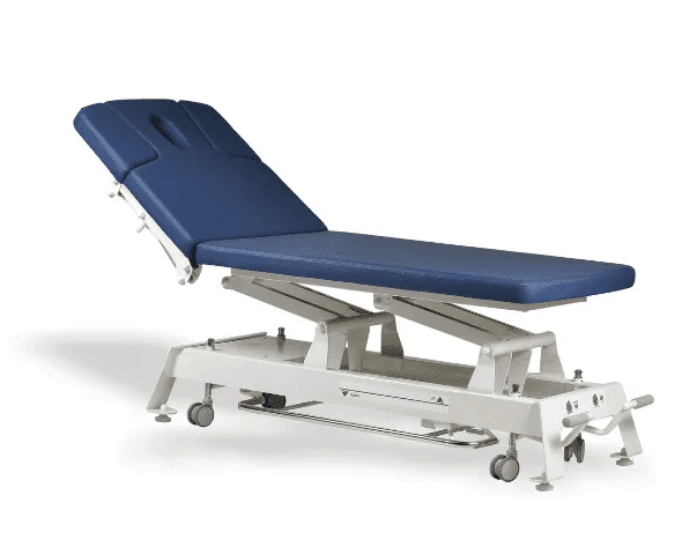
Physiotherapy clinics handle a wide range of cases, from post-surgical rehabilitation to sports injury recovery and chronic pain management. The treatment table sits at the centre of every session, and its design shapes how effectively and safely each appointment unfolds. A table that forces the therapist to adapt to its limitations creates problems that accumulate steadily across a working week.
Strain That Starts at the Table
The Toll of Repetitive Awkward Posture: Physiotherapy tables with fixed or manually operated height mechanisms are among the more common contributors to therapist fatigue in clinical settings. When a surface cannot be set to a suitable working height, the therapist bends, twists, or overreaches repeatedly throughout the day. That strain adds up across a full appointment schedule, and its effects on therapist health over time are rarely insignificant.
Procedure Variety Demands More Than One Position: An examination table for clinic environments must support more than a single patient orientation. Spinal mobilisation, limb assessment, and soft tissue treatment each require different positions, and a table that cannot shift between them easily forces unnecessary patient handling. That extra effort adds to physical load on the therapist and reduces the precision of each manoeuvre.
What the Patient Experiences on the Table
The Clinical Cost of Poor Support: Patient comfort during treatment is not a secondary consideration. When a patient is poorly supported, the body responds with involuntary muscle tension. That tension, known in clinical practice as guarding, limits tissue mobility and makes accurate assessment harder to carry out. A table that supports the patient correctly reduces this response before the therapist even begins.
Adjustability That Protects the Patient Throughout: Keeping a patient comfortable across a long treatment session requires genuine positional adjustability, not just a flat surface that tilts at one end. Biomechanical load distribution across segmented table surfaces, where sections can be angled independently, prevents pressure from concentrating in one area of the body. This matters particularly in chronic pain cases, where even a minor positional shift can interrupt a session entirely.
Features That Separate the Useful from the Merely Adequate
How Table Design Affects Therapist Posture Over Time: Postural compensation is a well-documented response to working at surfaces that are consistently too high, too low, or structurally unstable over time. Therapists who work with poorly designed tables develop habitual adjustments to their body position, and those adjustments place repeated stress on the spine, shoulders, and wrists. Equipment quality has a direct and measurable bearing on therapist health across a career.
Key features worth assessing when selecting a physiotherapy treatment table:
- Electric height adjustment that repositions the surface without tools or manual effort
- Multi-section design accommodating prone, supine, and seated treatment positions
- High-density foam upholstery that retains its shape through repeated daily use
- Stable base construction that does not shift or flex under lateral treatment pressure
- Disinfectant-resistant surface materials that hold up without cracking or discolouring over time
- Foot-operated controls that allow height adjustment without breaking hand contact with the patient
Frame Quality as a Long-Term Investment: Treatment tables in active clinics go through a high volume of adjustments and patient transfers each day. Frames built from precision-welded steel and finished with abrasion-resistant upholstery handle that volume without rapid wear. A well-constructed table does not need replacement every few years, which matters when clinic equipment budgets are planned across longer operational timelines.
Where Good Equipment Takes a Clinic
Selecting ergonomic physiotherapy tables is a long-term decision that affects both therapist wellbeing and patient experience. Clinics that prioritise quality at the point of setup tend to avoid the workflow disruptions and replacement costs that come from furniture wearing down under daily clinical pressure. For those assessing options, speaking with a manufacturer about specifications, delivery timelines, and pricing is the most direct next step.
