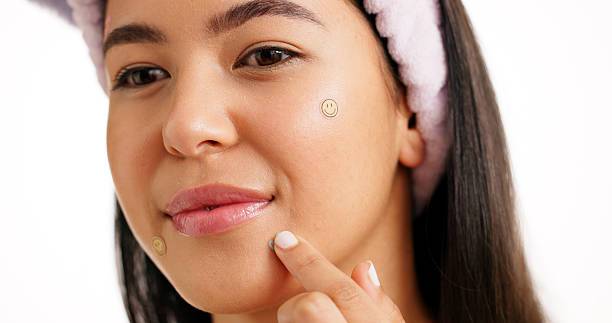
It was once the same thing when talking about acne remedies. It would be a bottle of abrasive cream, some stinging gel, and then a few days of skin flaking around the spot. But then it became clear that the same substance used by the hospital for burn patients could also extract impurities from a spot, in the form of acne patches.
Now there are dozens of types of pimple patches available on the shelf. Some absorb. Some deliver ingredients into the skin. Some barely do anything at all. If you have stood in a pharmacy aisle wondering which one to grab, this is for you.
What a Pimple Patch Is, in Plain Words
An acne patch is a small sticker that sits on a breakout. The good ones are made of hydrocolloid, the same dressing material used in wound care. The patch turns into a soft gel against the skin and pulls fluid, oil, and bacteria out of the pore.
You can see it work. After a few hours, the patch turns cloudy or white. That milky color is what used to be inside the pimple.
A patch also serves as a barrier. Your fingers cannot reach the pimple. Bacteria from the outside cannot get in. According to the American Academy of Dermatology, picking and squeezing pimples raises the risk of scarring and dark spots that can last for months.
Hydrocolloid: The Workhorse
When dealing with a whitehead on your skin’s surface, the ideal patch to apply is the hydrocolloid patch. This kind of pimple contains fluid, which the patch can suck into itself, while the seal encourages fast healing. Place a thick overnight patch on the pimple after cleaning it. Come morning time, you will notice a difference.
Skip moisturizer or oil on the spot first. Wear time should be six to twelve hours. Beyond that, the patch is saturated and stops working.
Microdot: The Patch That Reaches Deeper
Hydrocolloid does very little for a deep, painful bump that has not surfaced. There is nothing to absorb yet.
That is where microdot patches come in. The patch has tiny dots on the underside. Each dot dissolves into the upper layer of skin and carries support past the surface barrier. The patch reaches the pimple from above instead of waiting for it to come up.
Microdots are most effective when applied to the bump you can feel but cannot see, or the red sore that will not pop up. Applying a microdot at the right time may make your breakout cycle shorter. Some bumps disappear without developing a head, and that is the quiet success of good skincare.
Matching the Patch to the Pimple
Most people fail with patches because they buy one type and use it on every breakout. The right pimple patch depends on what your skin is doing right now, not on what was on sale last week.
Zitlabs built the line around exactly this gap. Three patches matched to three stages. Overnight for whiteheads. Daytime for everyday wear and healing. Microdot for the deep bumps that refuse to surface.
Browse the full collection at patchtherapy.com/collections/all and pick the patch that fits your next breakout.
Featured Image Source: https://media.istockphoto.com/id/2238503127/photo/acne-patch-smile-and-skincare-with-woman-in-studio-for-spot-treatment-beauty-and-blemish.jpg?b=1&s=612×612&w=0&k=20&c=Yl3PZ3iAd-xi8ftCHIfSInIDj24Hg8dR9sdTEDJYZyo=
